Play in your browser
Press Play and give the web build a moment to load. A desktop browser or landscape tablet view is the most comfortable fit.
Press Play and give the web build a moment to load. A desktop browser or landscape tablet view is the most comfortable fit.
Expect an unsettling school setting, violence, sexual themes, non-consensual behavior, and intense relationship dynamics. Check the game’s own content notes before starting.
This is an independent place to launch the web build. THE Kid at THE BACK and its assets remain the property of their respective owners.
THE Kid at THE BACK is a dark visual novel set in the close quarters of a school day. Its premise is small on purpose: notice the quiet student at the back of the room, and ordinary moments begin to carry more weight. The setting is familiar, but the feeling is not. A classroom, a pause after a line of dialogue, or the sense that someone has been watching can all become part of the tension.
That is the appeal of the game. It does not need a huge world or a long list of systems to make an impression. Instead, it makes attention feel important. You are encouraged to read what people say, notice what they avoid saying, and sit with the consequences of a choice before moving on. The result is closer to an uneasy conversation than a race through a checklist.
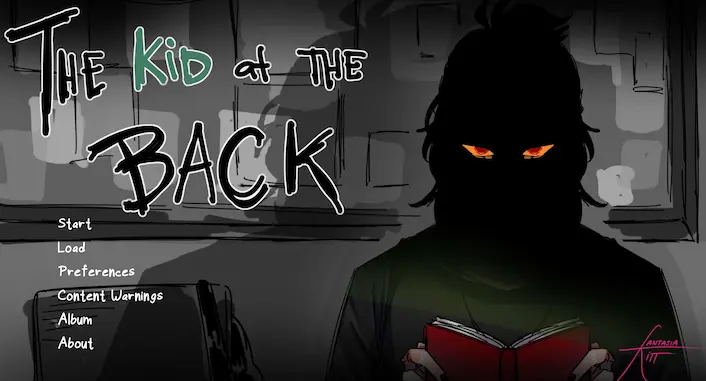
Known to some players as TKATB, the game is best approached with as little advance detail as possible. This page is here to make that first playthrough simple: launch the browser build, know the general tone in advance, and go in without a page full of spoilers telling you what every scene is supposed to mean.
THE Kid at THE BACK sits in the space where school drama, romance, and psychological unease overlap. The story's power comes from contrast. A scene can begin like an ordinary interaction and gradually reveal a different emotional temperature. A response that seems considerate may also be an invitation; a quiet moment may feel safe, or it may not. That ambiguity is much of the point.
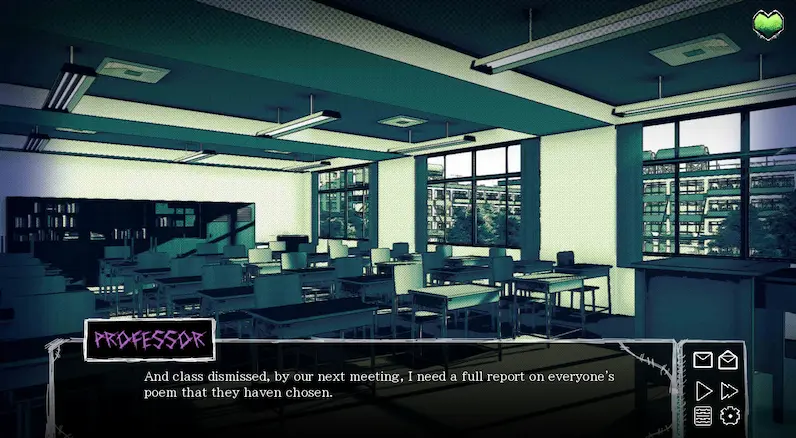
If you enjoy visual novels for character writing, mood, and the chance to slow down with a scene, this is the right way to meet it. It is less about mastering an action challenge and more about being present for the dialogue. Let the text breathe. The strongest moments often come from the small details around a decision, not from rushing toward an answer.
The player above opens the web build directly in your browser. Choose Play, wait for the game window to finish loading, then click inside the frame if your browser needs an extra interaction for keyboard input or audio. A first visit may take longer while the build loads. Once it is open, treat it as you would any other browser game: keep the tab active while it starts and avoid closing it before you are ready to leave the session.
A desktop browser is the most comfortable setup because it gives the text, artwork, and controls room to breathe. A tablet in landscape can also work well. On a phone, rotate to landscape if the interface feels crowded. If the player remains blank for more than a moment, refresh once. If that does not help, try an up-to-date browser with normal site storage enabled.
Take your time with the dialogue and play somewhere you can use sound if you want the full mood. This is not a story that benefits from skimming every line to reach the next prompt. Read the reactions around a choice, not just the options themselves. You do not need a guide for a first run; a clean first impression is usually more rewarding than trying to optimize every outcome from the outset.
It is also worth setting expectations for the tone. This is a dark story with uncomfortable relationship dynamics and an unsettling atmosphere. It is not a light school-romance game, and it may not be the right choice for every player or every mood. Check the game’s own content notes, take a break when you want one, and stop if the material is not for you.
Start with the choices that feel natural to you. Pay attention to the way a character reacts before and after a response, especially when a scene changes direction faster than expected. Visual novels are enjoyable because your reading of a person can change as new context appears. There is no need to turn your first session into research.
Afterward, you can decide whether you want to revisit a scene, make a different call, or simply leave the story where it landed. That is a better use of replayability than a list of route instructions. A good fan page should help you get to the work, not stand between you and it with a long explanation of every surprise.
This is a good fit for players who like a visual novel to create a distinct mood quickly. You may enjoy it if you are drawn to intimate settings, expressive character art, dialogue that asks you to read between the lines, or stories that let discomfort sit beside attraction. The classroom setting gives the story a close, contained quality: it is less about discovering a giant fictional world and more about seeing a familiar place take on a different meaning.
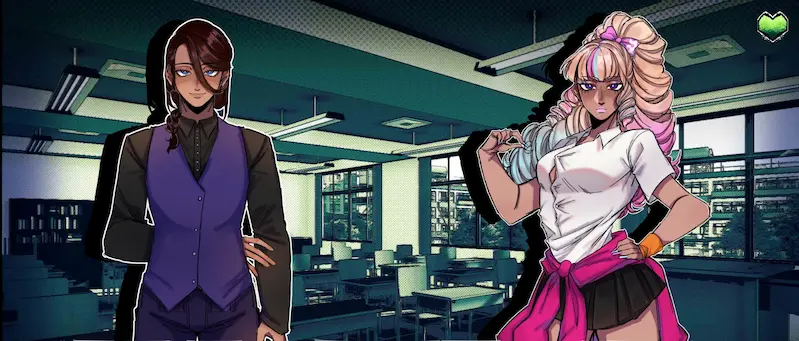
It may be less suitable if you are looking for a broad sandbox, fast action, or a cheerful romantic comedy. The page describes the game as dark because the tone matters, not because “dark” is a decorative genre label. Go in expecting a story that can be tense, personal, and occasionally unsettling. That is useful context for a new player, and it says more than a long, spoiler-heavy list of plot events ever could.
For the smoothest start, use a current version of Chrome, Edge, Firefox, or another modern browser. Give the page a stable connection and leave the tab in the foreground while the game initializes. If your device is low on available memory, close a few heavy tabs first. These small checks solve many loading problems without needing to change any browser settings.
On touch devices, landscape orientation gives the game more breathing room. On a laptop or desktop, full screen can make longer scenes easier to read. If audio does not begin immediately, interact with the player first; browsers commonly require that step before they allow embedded media to play sound. If a problem persists, the direct game link shown in the player’s loading message is a useful fallback.
This is an unofficial, independent browser launch page. It is not the official site of the creators or publisher, and it does not claim to replace the original project pages. THE Kid at THE BACK, its name, characters, artwork, and other related material belong to their respective owners. The purpose here is practical: a clear place to start the web version, with enough context to help a new player decide whether it is for them.
That distinction matters. Information about an independent game can travel quickly through clips, short posts, and fan discussion, often without context. Rather than adding more rumor or overexplaining the plot, this page keeps its claims narrow and its introduction spoiler-free. For official news, releases, and creator information, always rely on the game’s official channels.
Yes. Select Play above to load the browser build hosted through this fan page.
No. This is an unofficial fan-made launch page and is not affiliated with the game’s creators or publisher.
It may run on a modern mobile browser, but a desktop browser or tablet in landscape is generally easier for reading visual-novel text and controls.
Web builds can take a moment to start, especially on a first visit or a slower connection. Keep the tab open, wait briefly, and refresh once if the game window does not appear.
Some browsers wait for a click inside an embedded game before allowing audio or keyboard input. Click the game window once after it loads, then check your browser and device volume.
No. The game has dark themes and intense relationship dynamics. Please review the official content information and use your own judgment before playing.
Need a hand?
If you are unsure what to do next, these full playthroughs can be useful route references. Use the commentary run to compare a scene or find your footing; use the completion guide when you want to track down endings and secrets.